BY SOFO ARCHON

Globally, tens of millions of individuals are addicted to drugs. Because of this addiction, many lose everything: their health, wealth, relationships, and even their lives. Yet nothing seems strong enough to pull them out. Even though they know drugs are harmful, they continue to take them. So the question is: why?
Most people believe that drug addicts use drugs because they are irresponsible, immoral, or just stupid. Psychological research, however, tells a very different story: addicts are deeply wounded souls seeking relief from suffering. Many addicts were abused—sexually, physically, or emotionally—often in early childhood. Others grew up unloved, neglected, or abandoned during their formative years.
As a result of these traumatic experiences, they feel a sense of inner lack—a lack of love, joy, meaning, and purpose—which they attempt to fill through drugs. Whether by drinking alcohol, sniffing cocaine, or injecting heroin, their goal is the same: to find comfort, inner peace, and a sense of control over their lives.
The problem, however, is that the exhilarating effects of drugs are always short-lived. While they last, the addict feels euphoric, but within minutes—or at most hours—the effects fade. And then the pain returns. In truth, it never left; it was merely concealed, hidden yet present, waiting to resurface. When this happens, it feels unbearable, and addicts are drawn to psychotropic substances again. Yet no matter how much they consume, it is never enough to satisfy their needs. Inevitably, the same outcome follows, and the cycle of addiction repeats itself.
Drugs always fail in the long run because they cannot address the root cause of addiction: the sense of emptiness within. They offer only an external substitute for what the addict truly searches for—to feel worthy, whole, and complete.
In Buddhist tradition, there is a mandala called the Wheel of Life, which divides human existence into six realms, each representing different modes of being. One of these is the Realm of Hungry Ghosts. Its inhabitants are depicted as creatures with long, scrawny necks, tiny mouths, skinny limbs, and big, bloated bellies.
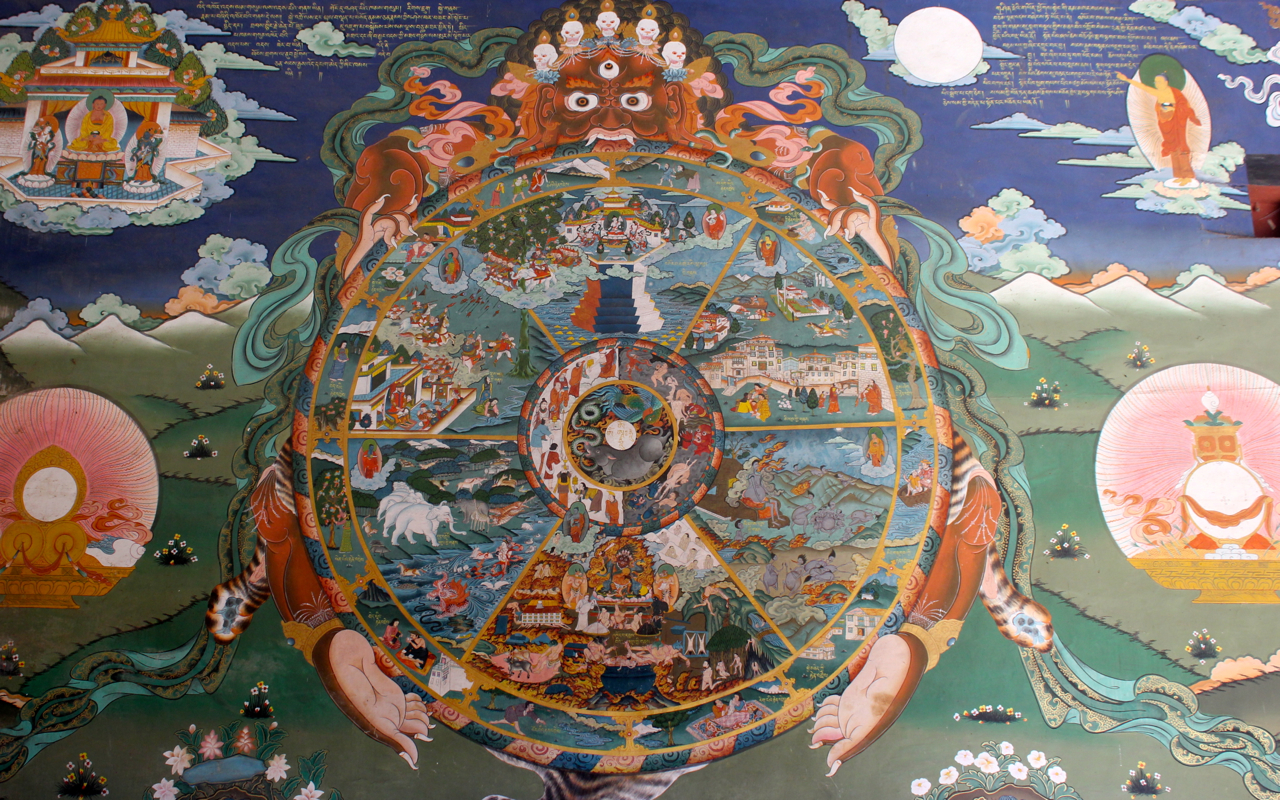
“This,” addiction expert Gabor Maté explains, “is the domain of addiction, where we constantly seek something outside ourselves to curb an insatiable yearning for relief or fulfillment. The aching emptiness is perpetual because the substances, objects or pursuits we hope will soothe it are not what we really need. We don’t know what we need, and so long as we stay in the hungry ghost mode, we’ll never know. We haunt our lives without being fully present.”

When we talk about addiction, most of us tend to think specifically of drug addiction. But addiction can take many forms: food, money, possessions, porn, video games, social media, and so on. Whether we realize it or not, many of us are addicted to at least one of these—some more, others less.
Food can give us a fleeting sense of fulfillment. Money can give us a fleeting sense of power. Possessions can give us a fleeting sense of security. Porn can give us a fleeting sense of intimacy. Video games can give us a fleeting sense of adventure. And social media can give us a fleeting sense of connection. Yet, no matter how much we consume or acquire, in the end, these things always let us down—they cannot provide what we truly, deep down, long for.

Often, we try to deal with addiction by fighting against it. We restrict our caloric intake, renounce money and possessions, repress our sexual urges, and so on—without realizing that addiction is merely a symptom of an underlying condition, not the cause. As a result, we can never truly eliminate it this way. On the contrary, we often find that we crave even more what we deprive ourselves of. In other words, our addiction grows stronger, not weaker.
When it comes to drug addiction specifically, our society tries to deal with it by waging war against drugs and their users. Laws punish those caught possessing them, aiming to control the circulation and consumption of drugs. Yet we rarely ask: why do people get hooked in the first place?
If we did, we would see that drug addicts are people suffering from mental health conditions who need help, not criminals who deserve jail. We would also recognize that society structurally fosters mental illness and addiction through systems that inevitably produce social alienation, as well as economic and political oppression.
But those in power do not want us to see this, fearing that awareness might threaten their position and the systems that uphold it. Instead, they misdirect our attention. By demonizing drugs and drug addicts, they divert focus from the structural causes that perpetuate addiction. It is no wonder, then, that so many people remain addicted, despite harsh drug laws in most countries.
To address drug addiction—or any form of addiction—effectively, we must stop fighting it and start understanding it. We need to stop judging or punishing those who suffer, and instead treat them with respect and compassion. Only then will we be able to uncover the roots of addiction and support those struggling on their journey to recovery and healing.
My work is reader-supported. If you find value in it, please consider supporting with a donation.